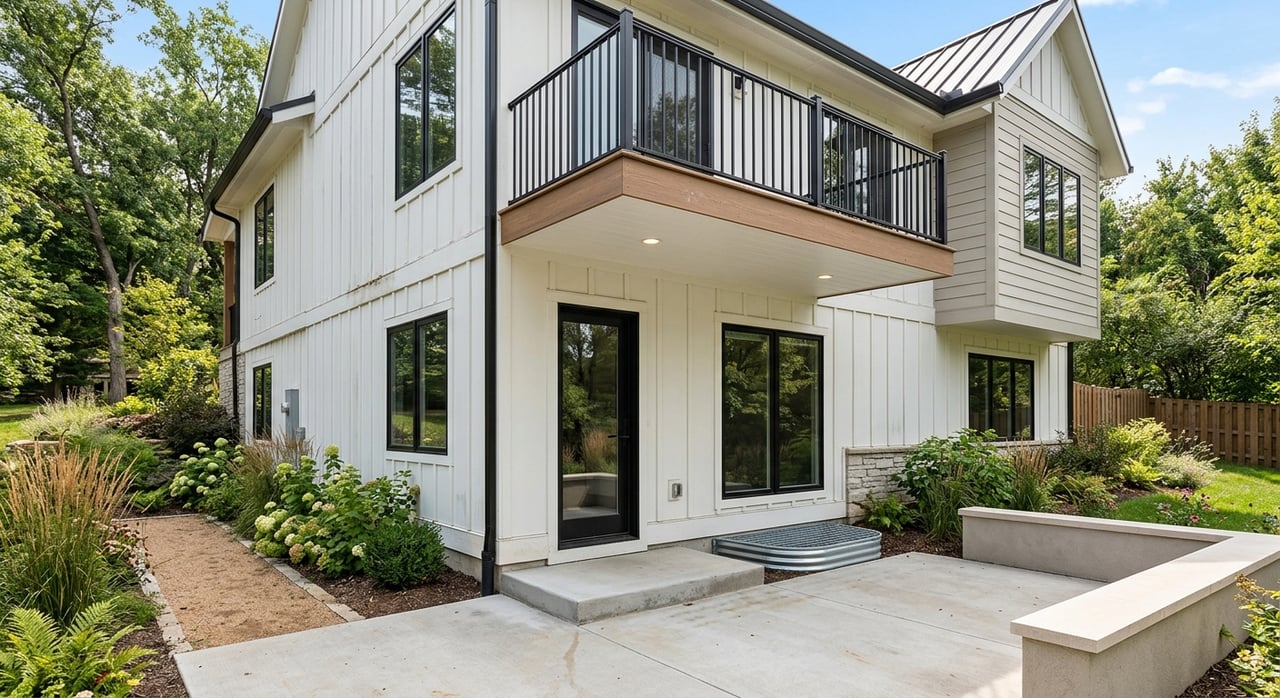
Buying in Erie With Strong Rental Potential in Mind
April 23, 2026
April 23, 2026
If you are buying in Erie and hoping your home can help you financially later, you are not alone. Many buyers want a property that works for them now and offers future rental or house hack potential down the road. In a fast-growing market with limited rental supply, that kind of flexibility can matter, and Erie is a place where planning ahead really counts. Let’s dive in.
Erie has been growing quickly, which is part of why buyers are looking closely at long-term flexibility. The town’s year-end 2025 population estimate reached 41,916, up 4.3% from 2024, and Erie projects 48,000 residents by 2030, according to the town’s population report. Growth like that can support long-term housing demand.
At the same time, Erie does not have a large supply of naturally rentable housing. The same report notes that nearly 93% of residents live in single-family homes, and the vacancy rate is about 2.3%. Erie also says it needs more housing diversity, including more renter and owner variety and more attached and multifamily housing, as outlined on the town’s Affordable Housing page.
For you as a buyer, that creates an interesting setup. Rental flexibility may be valuable in Erie, but it often comes from a home’s layout, basement, lot, or future improvement potential rather than from buying a property that was already built as an income property.
In Erie, house hacking usually means using part of your home to help offset ownership costs. That could be a finished basement with a functional layout, a roommate-friendly floor plan, or a property with room for a future accessory dwelling unit, often called an ADU or carriage house.
That matters because housing costs are not small here. Census QuickFacts for Erie show a median owner-occupied home value of $685,900, a median gross rent of $2,775, and median monthly owner costs with a mortgage of $3,055. Even if a future rental setup does not fully cover your payment, it may still meaningfully reduce your monthly carrying costs.
Public rent benchmarks also help frame expectations. HUD’s FY2026 Fair Market Rent schedule for Weld County and the Greeley MSA lists gross rent estimates of $1,171 for a studio, $1,238 for a one-bedroom, $1,563 for a two-bedroom, $2,174 for a three-bedroom, and $2,590 for a four-bedroom unit. These numbers are not a promise of what any specific property will rent for, but they are a useful public benchmark when you are evaluating the financial upside of a flexible layout.
Not every home in Erie will be a good fit for future rental use. Since detached single-family homes dominate the market, the most promising properties are usually the ones with the right physical setup from the start.
A basement can be one of the strongest value-add features if it has the right layout. Look for homes with enough square footage, practical ceiling height, plumbing access, and a floor plan that could support privacy and daily living without major reconstruction.
Separate access potential can also matter. A basement that is easier to enter independently may offer more flexibility later, but the legal use still depends on permits, code compliance, and approval.
Some homes offer house hack potential without creating a separate unit. A main-level bedroom with a nearby bath, a split-bedroom design, or a finished lower level with living space can make shared living more comfortable if you plan to offset costs with a roommate or extended household arrangement.
This type of setup can be easier to work with than a full conversion. In Erie, where true secondary units are still uncommon, a practical interior layout may be one of the most realistic ways to build flexibility into your purchase.
If your long-term goal is to add a detached space later, lot configuration becomes a big deal. Erie’s housing policy shows support for more flexible housing types, and its special-district review policy gives credit for accessory dwelling units or carriage houses between 300 and 800 square feet when they account for at least 5% of units in a development plan, as reflected in the town’s housing policy materials.
That said, policy support does not mean every lot can accommodate an ADU. Setbacks, easements, survey requirements, utilities, and lot dimensions can all affect whether your plan is realistic.
A big mistake buyers can make is assuming future rental potential will be easy to add. In Erie, it is possible, but it is still more niche than many people expect.
The town’s 2025 housing report shows that among 720 new homes completed in 2025, only two were ADUs, according to the same year-end housing update. That tells you a lot. Homes with real, workable house hack potential exist, but they are not the standard product.
Because of that, your search should focus less on broad assumptions and more on property-by-property analysis. The right home is usually the one that already has the bones for flexibility, not the one that would need a complicated and uncertain transformation.
Before you buy with a rental strategy in mind, it is smart to understand how much of your plan depends on permits and approvals. In Erie, many of the projects that create future rental value require formal review.
The town’s permit guidance states that permits are required for basement finishes, room additions, attached and detached garages, and many interior and exterior changes. If your plan involves converting unfinished space or adding detached improvements, you will want to factor in both the timeline and the approval process.
This is one of the biggest reasons buyers should think ahead before making an offer. A house that seems flexible on the surface may not be nearly as useful if key changes cannot be permitted or if the lot creates expensive complications.
The purchase price is only part of the story. If you are buying for future rental potential, you should also pay attention to the extra costs that often show up after closing.
If your plan depends on building or finishing an ADU, Erie does not treat that like a typical do-it-yourself project. The town’s homeowner project rules say homeowner permits are only available for a person’s primary residence, and ADU new-construction permits and ADU interior-finish permits do not qualify for homeowner permits. Those projects must use licensed contractors.
That can materially affect your budget. If your house hack plan only works financially when you do the labor yourself, you may need to revisit your assumptions.
Detached structures can run into site constraints fast. Erie’s permit guidance explains that accessory structures over 200 square feet require permits, that no part of a structure may project into an easement, and that some projects must meet minimum setbacks even if a permit is not otherwise required.
The same guidance also notes that, as of September 3, 2025, accessory structures proposed within three feet of the required setback need additional survey documentation, and projects within one foot of the required setback require surveyor-stamped verification before concrete is placed. If you are eyeing a tighter lot, these details matter.
Utilities can also shift the numbers more than buyers expect. Erie’s Water Dedication Guide says single-family residential units, including attached units like duplexes and detached units like carriage houses, are charged based on 0.5 SFE per dwelling unit for indoor use, plus an outdoor irrigation demand component tied to lot size.
In plain terms, adding a second dwelling may involve more than design and construction costs. It may also come with water dedication or fee-in-lieu obligations that should be reviewed before you count on future cash flow.
When a listing sounds promising, the next step is verification. In a market like Erie, where rental flexibility depends so much on permits and property setup, due diligence is where smart buying happens.
Start by confirming what already exists on the property. Erie allows buyers to request documents like plot plans, permit cards, certificates of occupancy, soils reports, foundation plans, structural plans, and engineered documents through the town’s records request system.
This can help you answer practical questions such as:
A strong buyer strategy is to treat flexibility like an asset that needs proof. If the records are incomplete or the lot raises questions, you may want to investigate further before moving forward.
Erie is unique because it spans both Boulder and Weld counties. The town’s community profile confirms that dual-county footprint, and it is more than just a map detail.
For buyers, the exact parcel can affect taxes, oversight, and certain administrative requirements. If your long-term plan includes a rental strategy, you will want to verify the property’s location carefully and make sure you understand any county-specific factors that apply.
If you want future rental or house hack potential in Erie, the best move is usually to buy with flexibility already built in. That may mean prioritizing a home with a usable basement, a more private lower level, a roommate-friendly floor plan, or a lot that appears capable of supporting future improvements.
It also means being realistic. Erie’s growth, low vacancy, and limited rental diversity make flexible homes appealing, but the town’s rules show that good outcomes depend on layout, permitting, lot constraints, and budget. The opportunity is real, but so is the need for careful planning.
If you want help evaluating homes in Erie with an eye toward future flexibility, Tara Sisneros can help you look past the listing photos and focus on what will actually support your goals.
Stay up to date on the latest real estate trends.
I am committed to guiding you every step of the way—whether you're buying a home, selling a property, or securing a mortgage. Whatever your needs, I've got you covered.

Tara Sisneros
11859 Pecos St Ste 200 Westminster CO 80234